Bang & Olufsen Authorized Service Center
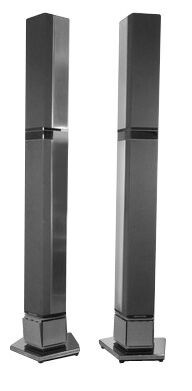
📋 A NOTE FROM MY WORKBENCH: The Penta series represents a unique chapter in B&O history. The active BeoLab Penta contains built-in amplifiers in the base (BeoLab 150 amplifier module), while the passive Beovox Penta requires an external amplifier. Both share the same 9-driver array and pentagonal cabinet. Age-related issues include: foam surround rot on all 4 bass-mid drivers per speaker, dried ferrofluid in midrange and tweeter drivers, crossover capacitor degradation (Beovox), and power supply capacitor failure (BeoLab active). I have factory service manuals for all Penta variants and 30+ years of experience restoring them.
⚠️ CRITICAL WARNING – PENTA SPECIFIC: For BeoLab Penta (active), the built-in amplifiers operate on ±45V DC. Capacitors in the PSU and amplifier boards degrade, causing hum, distortion, or complete failure. For Beovox Penta (passive), the crossover contains bipolar electrolytic capacitors that drift with age, altering crossover points and phase response. Additionally, all 4 bass-mid drivers per speaker use foam surrounds that inevitably rot after 15-20 years. Do not drive the passive Beovox Penta with an amplifier that cannot handle 4Ω loads.
- Amplifier: BeoLab 150 module, 2×100W (8Ω). Built-in active/passive crossover.
- Drivers: 4×5.2" bass-mid (foam surround), 4×2.5" midrange, 1×1" dome tweeter.
- Display: Orange LED display (source/volume).
- Cabinet: Pentagonal, made of Novodur resin, stainless steel cover.
🛠️ Known failures (BeoLab Penta MkI)
- Power supply capacitors: Bulging filter caps → hum, no start.
- Amplifier output transistors: Shorted → dead channel, distorted sound.
- All 4 woofer foam surrounds: Rot after 15+ years (distorted bass, rattling).
- Midrange/tweeter ferrofluid: Dries to sludge → reduced output, grainy sound.
- Driver IC (STK series): Failure in early models.
- Improved amplifier: Revised BeoLab 150 module, better heatsinking.
- Updated crossover network: Improved phase alignment.
- Display: Orange LED (unchanged).
- Same driver complement.
🛠️ Known failures (BeoLab Penta MkII)
- Woofer foam rot (still present).
- Dried ferrofluid in midrange/tweeter.
- Speaker protection relay oxidizes → intermittent sound.
- Power switch failure in base unit.
✅ MkII advantage: Improved thermal design; fewer amplifier failures than MkI.
- Final revision: Most reliable BeoLab 150 amplifier variant.
- Display: Green LED (distinguishes MkIII from earlier orange displays).
- Active crossover with tone controls.
- Discontinued 2000.
🛠️ Known failures (BeoLab Penta MkIII)
- Woofer foam rot (still occurs after 15-20 years).
- Dried ferrofluid in mid/high drivers.
- Standby power supply capacitor failure.
- Remote control receiver (IR) degradation.
✨ MkIII advantage: Most reliable active version. Green LED display is the easiest identifier.
- Passive design: No built-in amplifier. Requires external (≥50W RMS, 4Ω rated).
- Drivers: Same 9-driver array as BeoLab.
- Crossover: 3.5-way passive network with electrolytic capacitors.
- Connections: 2-pin DIN or standard binding posts (varies).
🛠️ Known failures (Beovox Penta MkI)
- All 4 woofer foam surrounds rotted.
- Crossover electrolytics dried: Altered crossover frequencies, phase shift, dull sound.
- Midrange/tweeter ferrofluid dried.
- Tweeter voice coil open from overload.
- Revised crossover design (same Type 6611, but crossover variant MkII).
- Improved capacitor selection.
- Same driver complement.
🛠️ Known failures (Beovox Penta MkII)
- Woofer foam rot (all 4 per speaker).
- Ferrofluid dried.
- Crossover capacitors still age (electrolytics).
📌 Type 6611 note: The same Type 6611 number applies to Beovox Penta units with MkI and MkII crossovers. I verify which crossover is installed before restoration.
- BeoLab Penta (Active): Amplifiers built into base. Requires Power Link or analog input. Has volume/display. Orange or green LED screen.
- BeoVox Penta (Passive): No amplifiers. Requires external amplifier (≥50W, 4Ω capable). No display, passive crossover only.
- Identical drivers and cabinet: Both share the same 9-driver array and pentagonal cabinet.
- Both suffer same age issues: Foam rot, ferrofluid drying, capacitor aging (PSU for active, crossover for passive).
📡 Conversion possibility: A BeoLab Penta can be converted to passive by removing the amplifier module and bypassing the internal crossover. I can perform this modification or convert a passive to active using a donor BeoLab 150 amplifier.
🔩 Universal Penta Failure Points (BeoLab Active & Beovox Passive)
| Area | Symptoms | Affects | Typical fix |
|---|
| Woofer foam surrounds (4 per speaker) | Distorted bass, rattling, visible cracks, missing foam | Both active and passive | Re-foam all 4 woofers with exact 5.2" foam surround kits (do not use rubber, alters T/S parameters). |
| Midrange/tweeter ferrofluid | Reduced volume from mid/high, grainy or dull sound, no output | Both active and passive | Disassemble, clean old dried ferrofluid, replace with fresh Ferrotec APG 1113 or equivalent. |
| Power supply capacitors (BeoLab only) | Hum, intermittent operation, no power, standby LED dead | BeoLab active only | Full recap of PSU board (main filter caps and secondary rails). |
| Crossover capacitors (Beovox only) | Dull sound, uneven frequency response, phase anomalies | Beovox passive only | Replace bipolar electrolytic caps with audio-grade equivalents (Mundorf, Jantzen, or high-quality electrolytics). |
| Amplifier output transistors/driver IC (BeoLab) | One dead channel, distorted output, protection mode | BeoLab active only | Replace STK module or discrete output devices, check bias. |
| Speaker protection relay (BeoLab) | Relay clicks but no sound, intermittent sound after warm-up | BeoLab active only | Replace relay (Omron type), check DC offset. |
Complete Penta Restoration Services I Offer
🔍 Full Diagnostic & Assessment Complete functional test of all 9 drivers, crossover/amplifier health, ferrofluid condition, foam condition, and electronic components.
🔈 Complete Driver Service Re-foam all 4 bass-mid drivers per speaker with exact foam surrounds. Replace ferrofluid in all 4 midrange drivers and tweeter. Test voice coils.
⚡ Amplifier & PSU Rebuild (BeoLab only) Full recap of main power supply and amplifier boards. Replace failed output transistors or STK modules. Re-bias amplifiers. Replace speaker protection relay.
🎛️ Crossover Recap (Beovox only) Replace all bipolar electrolytic capacitors in the passive crossover with high-quality audio-grade equivalents. Upgrade to MKP/film caps where space permits.
🔌 Input & Control Circuits (BeoLab) Service Power Link input, analog RCA inputs, and control panel. Clean all switches and potentiometers.
🏆 Complete Full Restoration (Active or Passive) All of the above — your Penta speakers returned to original factory performance.
💡 MY RESTORATION INCLUDES (per speaker): Re-foam 4 woofers • Replace ferrofluid in 4 midranges + tweeter • Recap PSU/amplifier (BeoLab) or crossover (Beovox) • Check all drivers • Replace protection relay (BeoLab) • Bias adjustment • 90-day warranty.
🔧 Re-foaming note: I use only exact 5.2" foam surrounds with the correct compliance for these drivers. Using rubber surrounds or generic foam will permanently alter the Thiele-Small parameters and ruin the bass response. I source my surrounds from trusted suppliers who manufacture exact-fit foam for Penta drivers.
📊 BeoLab Penta Amplifier Specifications (BeoLab 150 module)
| Parameter | Value |
|---|
| Power output (both channels) | 2 × 100W RMS into 8Ω (175W DIN/IEC total) |
| Frequency response | 40Hz – 20,000Hz ±4dB |
| Input sensitivity | 200mV (line), Power Link DIN |
| Protection | Dynamic Soft Clipping, overcurrent, thermal shutdown |
| Standby consumption | ~10W, main PSU active on signal detection |
🔊 Driver Array & Crossover (BeoLab active vs Beovox passive)
Bass-Mid drivers (4): 5.2" (135mm) paper cone, foam surround, 4Ω. Handles frequencies up to ~250Hz. Foam rots inevitably after 15+ years.
Midrange drivers (4): 2.5" (65mm) dome, ferrofluid cooled. Ferrofluid dries after 15-20 years.
Tweeter (1): 1" (25mm) dome, ferrofluid cooled. Also requires periodic ferrofluid replacement.
BeoLab active crossover: Active filter before amplifiers, with tone controls (bass, treble adjustment). Improved phase coherence.
Beovox passive crossover: 3.5-way passive network using bipolar electrolytic capacitors (age-prone). Requires full recap for original frequency response.
// Typical crossover frequency points (3.5-way):
Woofer-to-midrange: ~250Hz (active on BeoLab, passive on Beovox)
Midrange-to-tweeter: ~3.5kHz
Four woofers operate in two pairs (inner/outer), creating a 3.5-way design.
🔧 Restoration & Common Repair Tips (from my bench)
- BeoLab Penta: No power / standby LED dead: Check the internal fuse on the PSU board. If blown, likely shorted output transistors or bridge rectifier. I replace all PSU filter capacitors (2× 8,200µF or 10,000µF) as preventative maintenance.
- BeoLab Penta: Hum from both speakers: Bad main filter capacitors (dry ESR). I replace with high-ripple, 105°C types (Nichicon KG, Panasonic).
- BeoLab Penta: One channel dead or distorted: Failed STK hybrid module or discrete output transistors. I replace with genuine or equivalent devices and re-bias.
- Both variants: Woofers rattle or distort at moderate volume: Foam surrounds have rotted. I strip and clean the basket, install new foam surrounds with proper alignment (no shimming needed, I use tone method).
- Both variants: Midrange or tweeter sounds weak or grainy: Ferrofluid has dried. I disassemble the driver, clean out the old sludge with solvent, apply fresh Ferrotec fluid (APG 1113).
- Beovox Penta: Dull, lifeless sound, loss of sparkle: Crossover electrolytic caps have drifted. I replace all bipolar electrolytics with low-loss audio-grade caps (Mundorf ECap or Jantzen). For critical positions, upgrade to MKP film caps where space allows.
- BeoLab Penta: Relay clicks but no sound: Burnt relay contacts or high DC offset. I replace the relay and diagnose the cause of offset (failed input diff pair or dried caps).
🔋 Ferrofluid replacement note: The Penta uses four midrange drivers per speaker, all of which contain ferrofluid. I replace the fluid in all drivers to ensure uniform response and longevity.
🔍 Quick Troubleshooting Reference Chart
| Symptom | Variant affected | Most likely cause | My fix |
|---|
| No power / dead unit
| BeoLab active
| Blown fuse, dead PSU caps, shorted output transistors
| Replace fuse, full PSU recap, replace faulty output stage
|
| Hum from speakers
| BeoLab active
| Main filter capacitors dry
| Replace 2× 8,200µF or 10,000µF caps
|
| One channel dead / distorted
| BeoLab active
| Failed STK module or output transistors
| Replace module or discrete outputs, re-bias
|
| Bass distorted / rattling
| Both variants
| Woofer foam rot (all 4 woofers)
| Clean basket, replace foam surrounds
|
| Midrange weak / grainy
| Both variants
| Dried ferrofluid in midrange domes (4 per speaker)
| Clean and replace Ferrotec fluid
|
| Tweeter no sound / dull
| Both variants
| Dried ferrofluid or open voice coil
| Replace ferrofluid; if voice coil open, replace tweeter
|
| Dull sound, no sparkle
| Beovox passive
| Crossover electrolytic capacitors drifted
| Full recap of crossover with audio-grade caps
|
| Relay clicks, no sound
| BeoLab active
| Burnt relay contacts, high DC offset
| Replace relay, diagnose and repair offset cause
|
🇺🇸 NATIONWIDE SERVICE AVAILABLE 🇺🇸
Ship your Penta speakers securely — I serve all 50 states
My Service Area — Local & Nationwide
Local Service: Los Angeles County, Orange County, Ventura County, Riverside County, San Bernardino County.
Nationwide Service: Secure packing instructions for these 150cm, 40kg speakers — double-boxing with high-density foam required.
Los Angeles County: LA Burbank Glendale Santa Monica Hollywood Pasadena
Nationwide: NY TX FL IL WA All 50 States
🔊 Penta legacy (1986–2000): Designed by Lone and Gideon Lindinger-Loewy, the Penta was a milestone in B&O history. Its pentagonal cabinet — with no parallel surfaces — eliminated internal standing waves and allowed a column form factor that required minimal floor space. The 9-driver vertical line array, combined with Danish acoustic research, delivered uniform sound dispersion regardless of room furnishings. Whether you own the active BeoLab Penta (orange or green display) or the passive Beovox Penta (no display), both require restoration today: foam rot, dried ferrofluid, and capacitor aging are universal. My restoration service brings them back to original performance, preserving these design icons for another generation.